
 Dr. Whitney Wihlidal, Chiropractor in Orillia, ON
Flat feet can change how your entire body handles movement and load. When the arch of the foot drops, the foot often rolls inward with each step. This is called overpronation. That inward motion shifts how force travels through your body, increasing strain not only in the foot but also in the ankles, knees, hips, and lower back.
Over time, this repeated stress can lead to symptoms such as sore arches, heel pain, tired legs, and even discomfort higher up in the body. Whether you need custom orthotics depends on how your foot is functioning, not just how it looks. A proper assessment determines if your arch is collapsing in a way that affects alignment and load distribution.
Custom orthotics are designed to support the arch and guide the foot into a more stable position. When the foot is better aligned, pressure is distributed more evenly, and the rest of the body does not have to compensate as much. This can reduce strain, improve comfort, and help prevent long-term issues related to flat feet.
Many people assume flat feet are only a cosmetic issue, but they often contribute to ongoing discomfort and inefficient movement patterns. The key is understanding when support is necessary and when your body is already compensating well enough without intervention.
Understanding Flat Feet and Why They Are Often Misunderstood
If you have flat feet, you have likely noticed that your arches appear lower or absent when standing. For some people, this has always been the case. For others, the arch gradually drops over time. What matters most is not the appearance, but how your foot behaves under load.
As a chiropractor in Orillia, ON, I regularly see patients who are surprised to learn that their foot structure is influencing symptoms elsewhere in their body. Many come in focused on knee discomfort or low back stiffness, not realizing the root issue may start at the foot.
Flat feet are often misunderstood because pain does not always show up immediately. Some people function well for years before symptoms develop. Others experience early signs like foot fatigue or soreness that they dismiss as normal.
Another common point of confusion is the difference between flexible and rigid flat feet. Some arches appear when the foot is off the ground but collapse when standing. Others remain flat regardless of position. These distinctions matter when deciding whether intervention like custom orthotics is appropriate.
Understanding flat feet requires looking at function, movement, and load over time, not just a static snapshot of your foot.
What Flat Feet Are Really Doing to Your Body
When the arch drops, the mechanics of your entire lower body begin to change. The foot rolls inward, the ankle follows, and the lower leg rotates. This rotation affects how the knee tracks and how the hips and pelvis align.
Each step you take reinforces this pattern. And since most people take thousands of steps per day, even small inefficiencies can add up quickly.
Patients in Orillia, ON often describe a predictable progression of symptoms. It starts with mild discomfort in the feet, especially after long periods of standing. Then it develops into persistent arch soreness or heel pain. Eventually, symptoms may appear in the knees or lower back.
This chain reaction happens because the body is constantly adapting to an unstable foundation. Muscles work harder to stabilize joints. Tendons absorb more strain. Joints experience uneven loading.
Over time, this can contribute to conditions like plantar fasciitis, tendon irritation, and chronic foot fatigue. It can also influence posture and movement patterns in ways that are not immediately obvious.
As a chiropractor, I focus on identifying these patterns early. When we understand how the foot is influencing the rest of the body, we can address the root cause instead of chasing symptoms.
Simple Self-Test to Check for Flat Feet at Home
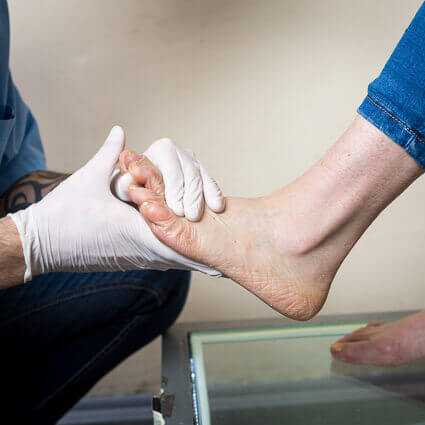
Before considering custom orthotics, it is important to understand what your feet are actually doing. In my clinic in Orillia, ON, I always start with a detailed foot and gait assessment.
At home, there are a few simple ways to screen yourself:
- Stand barefoot and look at the inside of your foot. If the arch appears very low or completely flat against the ground, that may indicate flat feet.
- Step onto a surface with wet feet and observe the imprint. A full footprint with little to no curve along the inside edge suggests a collapsed arch.
- Check if your ankles roll inward noticeably when standing or walking — this may indicate overpronation.
- Notice if your feet feel tired or sore after standing, or if you experience heel pain in the morning.
- Pay attention to whether your legs feel fatigued more quickly than expected.
These signs can indicate that your feet are not supporting your body efficiently. However, self-tests only provide a general idea. A proper evaluation by a trained professional is essential. As a chiropractor with experience in gait analysis and biomechanics, I assess not only the foot structure but also how your entire body moves and compensates.
When Custom Orthotics Are the Right Solution
Custom orthotics are not necessary for everyone with flat feet. The decision depends on function, symptoms, and how your body is adapting. In my Orillia, ON clinic, I recommend custom orthotics when there is clear evidence that the foot is not managing load properly.
Consider custom orthotics if you experience any of the following:
- Persistent foot pain, arch soreness, or heel pain that does not improve
- Visible overpronation — your foot consistently rolls inward during standing or walking
- Over-the-counter inserts that fail to provide adequate relief
- Long hours on your feet that result in fatigue or discomfort
- Active lifestyle or athletic training that places repeated stress on the foot
Even in cases where symptoms are mild or not yet present, orthotics can play a preventive role. Supporting the arch early can help maintain proper alignment and reduce long-term strain.
Custom orthotics work by guiding the foot into a more stable position. This improves alignment, stabilizes the heel, and distributes pressure more evenly. As a result, the rest of the body does not need to compensate as much.
How Custom Orthotics Improve Alignment and Reduce Strain
Restoring Proper Foot Mechanics
When the foot is supported correctly, it can function the way it was designed to. The arch helps absorb shock and distribute force. Without proper support, this system becomes inefficient. Custom orthotics restore this function by providing targeted support based on your unique foot structure.
Reducing Compensation in the Body
When the foot is unstable, the rest of the body compensates. Muscles work harder, joints experience uneven stress, and movement patterns become inefficient. By stabilizing the foot, orthotics reduce the need for these compensations — improving not only foot comfort but also knee, hip, and back function.
Improving Pressure Distribution
Flat feet often lead to uneven pressure across the foot. Some areas bear more load than they should, leading to soreness and fatigue. Custom orthotics help distribute pressure more evenly, reducing stress on specific structures and improving overall comfort.
Supporting Long-Term Joint Health
Over time, repeated stress can contribute to joint wear and tear. By improving alignment and reducing strain, orthotics can help protect joint health — particularly important for individuals who are active or spend significant time on their feet.
When to Seek Professional Care
If you are experiencing persistent foot pain, heel discomfort, or unexplained fatigue in your legs, it is important to seek professional evaluation.
As a chiropractor in Orillia, ON, I assess not only the foot but also how it interacts with the rest of the body. This includes evaluating gait, posture, and movement patterns.
Professional assessment is essential because flat feet are not always the primary issue. Sometimes the problem lies in how the body is compensating. A thorough evaluation helps determine the true source of your symptoms.
I use a combination of clinical observation, biomechanical analysis, and patient history to identify the underlying cause. From there, we can determine whether custom orthotics are appropriate and how they should be designed.
Nightly and Weekly Action Plan
If you suspect you have flat feet, start by paying attention to how your body responds throughout the day. Notice any patterns of discomfort or fatigue.
- Each night, assess your feet — look at your arches, check for areas of soreness, and reflect on how your feet felt during the day.
- Each week, monitor changes in your symptoms. Are your feet feeling more fatigued? Are you noticing discomfort in your knees or lower back?
- Incorporate supportive footwear into your routine. Shoes that provide adequate support can make a significant difference.
- If symptoms persist or worsen, schedule an evaluation. Early assessment can prevent small issues from becoming larger problems.
Final Thoughts
Flat feet are not just a structural variation. They influence how your entire body moves and handles stress. When the arch collapses and the foot rolls inward, it creates a chain reaction that can affect everything from your feet to your lower back.
Understanding whether you need custom orthotics starts with recognizing how your feet are functioning. Symptoms like foot fatigue, heel pain, and leg discomfort are often signs that your foundation needs support.
As a chiropractor in Orillia, ON, I focus on identifying and addressing the root cause of these issues. With proper assessment and targeted support, it is possible to improve alignment, reduce strain, and enhance overall comfort.
If you are dealing with flat feet, achy feet, or ongoing discomfort, it is time to take a closer look at your foundation.
Dr. Whitney Wihlidal
15 Matchedash St N.
Orillia, ON L3V 4T4
(705) 325-6425
Frequently Asked Questions
Do I need custom orthotics for flat feet in Orillia, ON?
You may need custom orthotics if your flat feet are causing symptoms such as pain, fatigue, or alignment issues. A proper assessment by Dr. Whitney Wihlidal, chiropractor in Orillia, ON, can determine if they are necessary.
Can flat feet cause back pain?
Yes, flat feet can contribute to back pain by altering alignment and causing compensation throughout the body. This can place additional stress on the spine and surrounding muscles.
Are over-the-counter insoles enough for flat feet?
Over-the-counter insoles may help in mild cases, but they are not tailored to your specific foot structure. Custom orthotics provide more precise support and are often more effective for persistent symptoms.
How do I know if I have overpronation?
Signs of overpronation include inward rolling of the foot, uneven shoe wear, and discomfort in the feet or legs. A professional assessment provides the most accurate diagnosis.
Can custom orthotics prevent future problems?
Yes, by improving alignment and reducing strain, custom orthotics can help prevent long-term issues related to flat feet.
Ready to Find Out If Custom Orthotics Are Right for You?
At Wihlidal Family Chiropractic, we focus on finding and addressing the root cause of your discomfort.
Learn what to expect as a new client or book your appointment today.